The £100,000 tax trap
Earn between £100,000 and £125,140 and every extra pound is taxed at 62%. That is harder than the rate a millionaire pays on their next pound. Here is why, and how a pension gets you out of it.
Why it happens
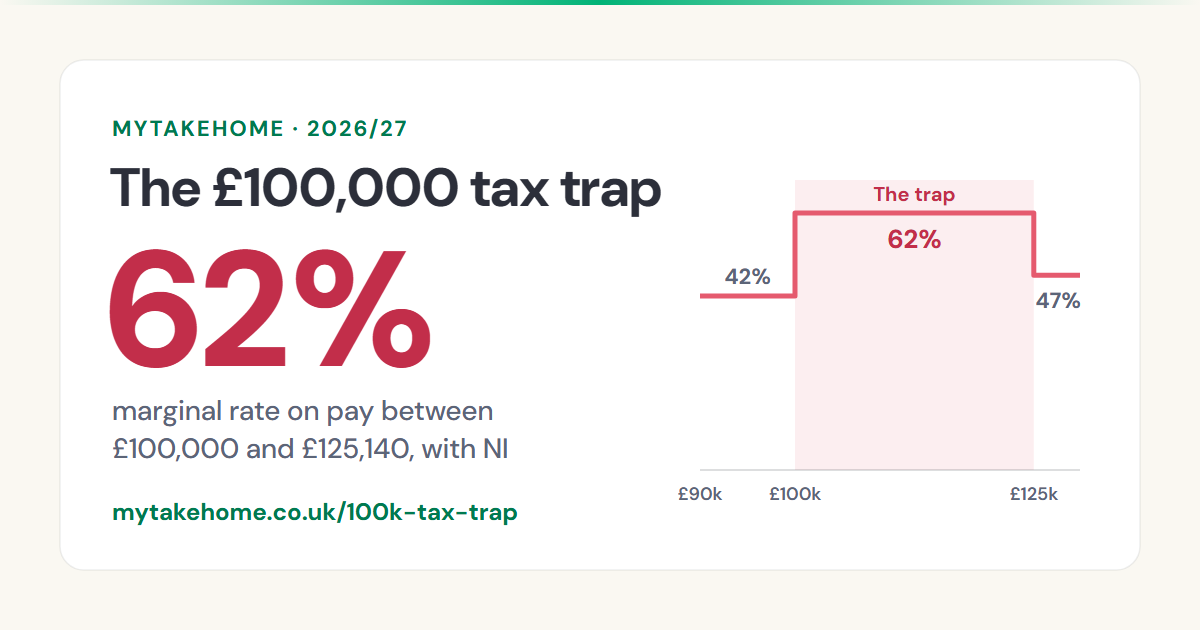
Everyone gets a £12,570 Personal Allowance, the slice of income taxed at 0%. But once your adjusted income passes £100,000, you lose £1 of that allowance for every £2 you earn. The pound you lose was tax-free; now it is taxed at the 40% higher rate. So £2 more pay costs 80p in tax on the pay itself, and another 40p on the pound of allowance that went with it: £1.20 on every £2, which is 60% in income tax. Add the 2% National Insurance on the pay and it is 62%.
Up to £100,000
42%
Higher rate plus NI. Normal.
£100,000 to £125,140
62%
Allowance withdrawn. The trap.
Above £125,140
47%
Additional rate plus NI. Lower than the trap.
Try it with your salary
Drag your salary to see the marginal rate and what you keep from a pay rise. Then add a salary-sacrifice pension and watch the Personal Allowance come back.
2026/27 rates, England, Wales and Northern Ireland, no student loan. Open £110,000 in the full calculator to add student loans, Scotland or a different pension type.
How a pension escapes it
Pension contributions reduce the income the taper is measured against. Bring your adjusted income back to £100,000 and the full £12,570 allowance is restored. On a £110,000 salary, sacrificing £10,000 moves £10,000 into your pension while your take-home falls by only about £3,800, because the income you redirected was being taxed at up to 62%. Few places in the tax system make a pension contribution this cheap.
The childcare cliff at £100,000
The allowance goes a pound at a time. Help with childcare does not taper at all. If either parent's adjusted net income is over £100,000 for the tax year, the family loses:
- Tax-Free Childcare, the government's £2 for every £8 you pay in, worth up to £2,000 a year for each child aged 11 or under, or £4,000 for a disabled child up to 16.
- In England, Free Childcare for Working Parents: 30 hours a week for 38 weeks of the year, for children aged 9 months to 4 years. Scotland, Wales and Northern Ireland run their own schemes.
One pound over the line ends both at once: with two children, the Tax-Free Childcare top-up alone is worth up to £4,000 a year. Both are measured on the same adjusted net income as the taper, so the pension contribution that restores your allowance keeps your childcare help too. Sources: GOV.UK: Tax-Free Childcare, GOV.UK: Free Childcare for Working Parents.
Frequently asked questions
What is the £100,000 tax trap?
Once your adjusted income passes £100,000, £1 of your £12,570 tax-free Personal Allowance is taken away for every £2 you earn. That lost allowance is taxed at 40%, so each extra £1 of pay is effectively taxed at 60%, or 62% once 2% National Insurance is added. The allowance runs out completely at £125,140.
How much of a pay rise do I actually keep in the trap?
At a £110,000 salary a £1,000 pay rise leaves you with about £380 after tax, National Insurance and the lost allowance. You give up roughly £620 of the £1,000.
How do I avoid the 60% tax trap?
Pension contributions reduce your adjusted income. A salary-sacrifice or relief-at-source pension contribution that brings your income back to £100,000 restores your full Personal Allowance. Because money in this band is taxed at up to 62%, the take-home you sacrifice to fund the pension is small relative to the amount going into your pot.
Do I lose free childcare at £100,000?
Yes, if either parent's adjusted net income is over £100,000 for the tax year. Tax-Free Childcare stops, worth up to £2,000 a year for each child, and in England so do the 30 hours a week of Free Childcare for Working Parents. Unlike the Personal Allowance this is a cliff, not a taper: one pound over loses all of it. It is measured on the same adjusted net income, so a pension contribution that brings you back to £100,000 keeps both.
Does the trap apply in Scotland?
Yes, and harder. The Personal Allowance is UK-wide, so it is withdrawn between £100,000 and £125,140 in Scotland too, and there both the pay and the lost allowance are taxed at Scotland's 45% Advanced rate rather than 40%. £2 more pay costs 90p in tax on the pay and 45p on the pound of allowance that went with it: £1.35 on every £2, which is 67.5% in income tax. Add 2% National Insurance and it is 69.5%. Use the full calculator with the Scotland option to see your own figure.
Using these figures
Writing about the trap? You are welcome to quote the figures on this page or use the chart. If you credit it, this is all it needs:
Source: myTakeHome, "The £100,000 tax trap", mytakehome.co.uk/100k-tax-trap
Every figure is calculated from the 2026/27 HMRC rates by the same engine as the calculator, and those rates are compared with GOV.UK every week. They last matched on 30 September 2026. For a figure this page does not show, such as a particular salary or pension, email hello@mytakehome.co.uk.
Download the chart image (PNG, 1200 × 630)
See your own numbers in full
The calculator adds student loans, Scotland, pension types and more.
Open the calculatorFigures use 2026/27 HMRC rates for England, Wales and Northern Ireland, with no student loan. Personalised tax advice is out of scope. See the myTakeHome tax guide for the wider picture.